Source: Image by meineresterampe from Pixabay
The three Rs of going green are so applicable in so many situations, right down to what we consume. I am typing this on the day when there is a lot of hype about Prime Day and sales galore and people are encouraged to shop, shop, shop! That is totally not the message one needs when you’re trying to live a life mindful of your impact on the environment because consumerism merely for consumerism’s sake baffles my mind. Yeah, I might save more if I buy on Prime Day but if it is not really something I need? Then, no, I’m not really saving anything because I am spending money on something I do not have a need for in the first place. So… by not buying, I’m saving even more! Woo hoo!
That is totally not the topic that I want to explore in this post, however. Today, I want to chat with you about our food consumption because we can apply the three Rs to how we consider food. According to the United States Department of Agriculture (USDA), “food waste is estimated at between 30-40% of the food supply. This estimate, based on estimates from USDA’s Economic Research Service of 31% food loss at the retail and consumer levels, corresponded to approximately 133 billion pounds and $161 billion worth of food in 2010.” That is a lot of food going to waste, finding its home in a landfill somewhere and generating methane rather than nourishing the minds and bodies of our citizens.
I saw a television show a couple of years ago called “The Big Waste” where top chefs were challenged to make multi-course meals in 48 hours with items destined for the trash. It was on the Food Network, if you want to look it up. They had to get creative and examine what they had to work with. They were salvaging fruit that had a bad spot or two on it but when that was removed, there was still a decent amount of fruit left that was usable. I distinctly remember one of the chefs commenting on how produce often gets tossed if it does not look like the ideal piece of fruit of vegetable. After all, advertisements show us that apples are highly polished, rosy cheeked, and well rounded; grapes are always lush and full of juice while strawberries are almost 100% ruby red with a nice dark green leafy top. We are shown the ideal of what we “should be” buying. Sadly, with enough consumers buying into that ideal, that means an apple that has grown somewhat misshapen or there were just a touch or two of bruising on an otherwise gorgeous gourd, those things were headed for the landfill or possibly as foodstuffs for livestock. It really made me stop and think of how much food I might toss or not consider purchasing because of a blemish or element that does not impact the item’s primary purpose: to provide sustenance. It all starts with owning our actions and making changes, like being willing to consider a slightly less-than-perfect piece of fruit to include in my shopping. I do draw the line at hairy fruit. Unless it is a kiwi or peach, I am not a fan of fuzz on the fruits.
I will readily admit I am not the best cook in the world nor the most innovative and creative with culinary skill. I really like Crock Pots and meal planning with those dump-and-go type recipes where there’s a lot of prep work but I don’t have to do a lot of actual cooking. When I do cook, I need recipes with measurements and a grocery list. My bestie will attest that her style of measuring – which involves eyeballing, estimating, and guesstimating – drives me nuts. She has really made some amazing things that I cannot replicate because no precise measurements. I am also not great at merely looking at my pantry and fridge and thinking, “OH! I can make XYZ out of these random things and it will taste awesome and the kids will eat it!” To those who can do so, I salute you! It is truly a gift that impacts your wallet and the planet!
That type of creative, outside-the-box cooking is an excellent way to reduce your food waste because you are using items you already have purchased. Rather than going to the store for another quart of raspberries for a compote, you could try using the blueberries from last week that are almost a bit old but not quite there yet. Using what you have can seem especially challenging with your fruits and veggies. Some of those items seem to hit peak edibility some time between when you place them on the counter and when you turn back around to put them in the fridge. If you have run out on meat but have a plethora of eggs, change up your menu and do breakfast for dinner! Flexibility is key in using your food up before it gets to the point of not edible and it will sure be better for your wallet in the long run. If you are like me and not very creative, there are a number of sites and apps that allow you to plug in your ingredients and find a meal that is built around what you already have. This article from Escoffier offers seven such electronic venues for you to choose from.
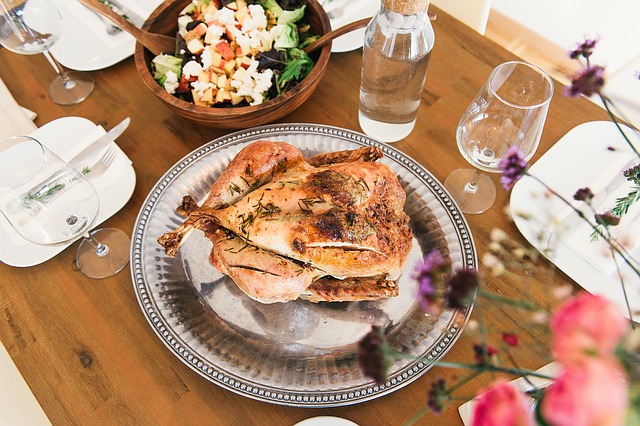
Chicken… it’s what’s for dinner tonight, tomorrow, and next Sunday, too.
Source: Image by Free-Photos from Pixabay
One of my former bosses has a mother who knows how to cook. He told me many stories about the things she would fix when he was growing up. One particular story that he shared has really stuck with me because I am in awe of her ingenuity. He told me his mother would often purchase a whole chicken and bake it and they would eat baked chicken for a couple of days. She would get all of the remaining meat off the bone and use those meaty remnants in a soup or stew, fortified with a variety of beans and veggies. She would also boil the bones and get a bone broth from that to use in other recipes. No part of the chicken went to waste and a single chicken could be found on his dinner plate for a week in a whole lot of different forms. I am lucky to get two rounds of meals from my cooking. I can’t imagine being that creative but when she was growing up, that was what you did. You had to be inventive and you had to be frugal because food wasn’t as readily available as it is now and you didn’t always have the means to buy all that you wanted or needed.
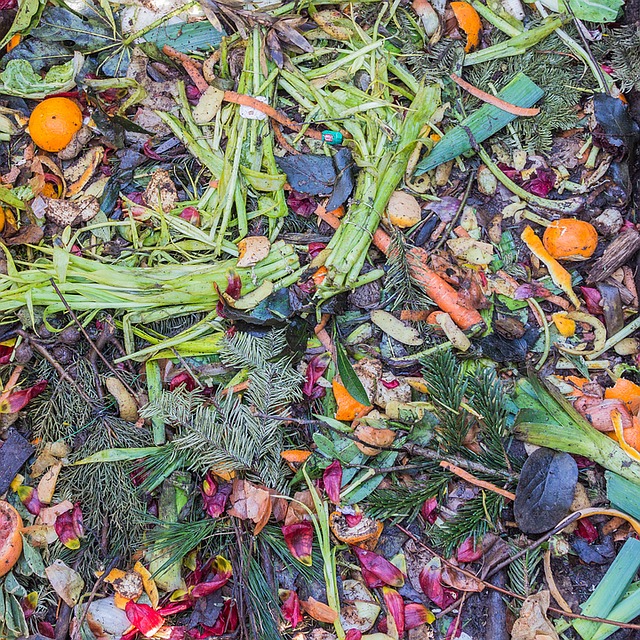
Let’s recycle those scraps and make new earth!
How often do we end up tossing leftovers because they don’t get eaten quick enough or we get bored with the food? I will admit that I have tossed more uneaten leftovers than I care to admit in the trash. However, with some intentional thought, we can reduce our food waste by composting – aka recycling – what we can and turning it into new, rich soil which could help nurture and support a garden to provide you with another round of fresh produce for your kitchen. I found another blogger site (Small Footprint Family) that offers you a list of “100 Things You Can Compost” along with handy tips and guidelines for how to create your own compost bin or where to purchase one that easily turns.
I grew up with a compost pile in the back edge of the yard. We didn’t have a fancy bin or anything. It was a pile we’d just add to and turn over with a shovel once in a while. I raised meat rabbits (love my New Zealand Whites!) for three years in high school and they generated a lot of contributions to the compost pile! That plus grass clippings, leaves, weeds from the garden, scraps from veggies and fruits, banana peels… if it was biodegradable, it was tossed in. I also raised chickens for a couple of years and we would take the eggshells and bake them in the oven for a bit, then crush them into small bits to sprinkle with the chicken’s feed so they could get more calcium in their diets. The purpose of the baking was so that the chickens didn’t associate the crushed shells with the eggs they were producing and destroy the freshly laid eggs.
One side bonus of composting on the ground for those who love to fish? You can often find some amazing worms that make excellent fishing bait. Granted, if you take them fishing, you’re losing out on the worm helping break down your compost pile but it is one of those tough questions you would just have to consider. I like bass fishing myself.
In our current home, we have a large plastic barrel that J cut a door in, complete with hinges and a pair of latches, so that we could roll it around the yard to stir the contents inside and help them breakdown faster. I would like to upgrade to one with a handle I can turn rather than having to chase the barrel down a decent slope in the yard. Hauling it back up to its original resting spot gets a bit tiresome but maybe that can count as a workout. Who knew that composting could also double as part of your workout routine? All the multi-tasking we can accomplish by going green is amazing!
I will add that as a general rule, I do NOT add meat or things like fat to my compost. I keep it to the greens, rabbit manure, egg shells, leaves, etc. as the smell of decomposing meat could draw unwanted critters. We live in a rural setting and already deal with snakes, skunks, stray dogs and cats, and an assortment of others including a visually impaired fox that likes to follow J to his car in the wee hours of the morning. I don’t want to draw in more creatures with the smell of decomposing meat.
One thing to keep in mind with composting is make sure it is allowed where you live. A small compost bin in the backyard might be easier to work with than if you lived in, say, an apartment. That might impede your green composting efforts. If you can’t compost where you live, perhaps you could network with another like-minded person who doesn’t mind adding your contributions to their compost pile.
In a nutshell
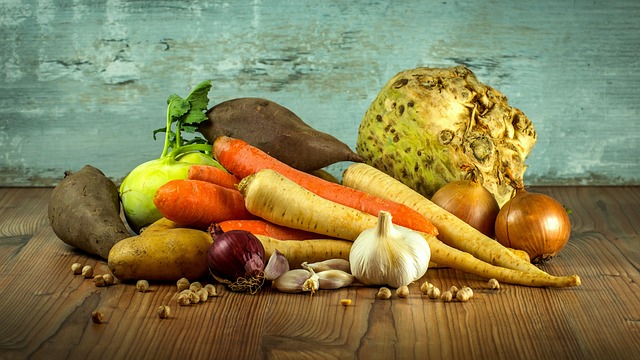
So to review in a nutshell, when it comes to our food, we can reduce our food waste by thinking outside the box and use up the food we already have purchased. We then can reuse and get creative on how we can take a main food item like the humble chicken or a large bag of diced, mixed veggies and use it in different meals. Finally, recycle what we can and return it to the earth, taking it full circle to where that plant or veggie or fruit can provide the nutrients for the next generation of plant to grace your table. Go green, Texans and fellow residents of Earth! ~ Lacie ~
Source: Image by Lubos Houska from Pixabay
 Going Green In Texas
Another informative read. As an adult, I am wanting to save money any way I can. I have thought of starting a garden but have not gotten around to it yet. Reading your blogs may encourage me to start one and look into composting if it is allowed where I live.
LikeLiked by 1 person
Love these tips!
LikeLiked by 1 person