My husband usually checks the mail every day and sets it on the table for me so I can see if there is anything in it that we need to keep. Most of it is not needed because it is junk mail: advertisements from random companies, credit card applications, a couple of actual bills because they don’t offer e-billing. You never know what we are getting in our mailbox but 95% of it is usually junk that we do not need. It’s a lot of waste.
Just last Friday, I received three pieces of mail: two envelopes containing a credit card offer and an advertisement for something – I didn’t bother reading it – while the third piece of junk mail was a flyer on cardstock from our local furniture store. I have always wondered just how effective these direct mailings are in actually generating sales. I’m not in the market for new furniture nor a new credit card and if you read my Friday posts, you know I’m not keen on spending money without some serious thought.
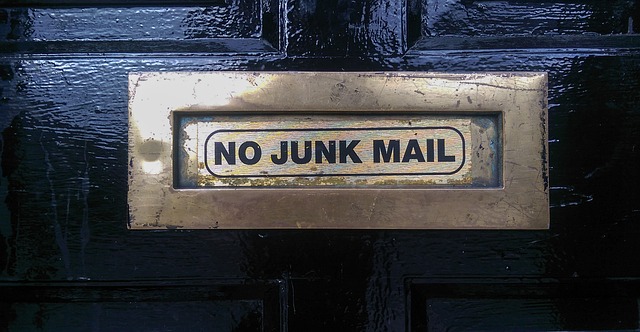
With these random pieces of junk mail cropping up from time to time, it may not seem like much but if you think about how much junk mail YOU receive and then extrapolate that number based on the number of homes within your community or city or county, that becomes a pretty hefty amount of paper and ink that is being distributed into people’s mailboxes and subsequently their trash cans and destined for the landfill. I read a few articles about junk mail and there are various estimates ranging from 41 pounds to 69 pounds is how much junk mail Americans receive annually. That is a LOT of trees being cut down to make the paper!
We have talked previously about recycling or composting paper. With junk mail, this could still be an option depending on the type of paper it is. The glossy stuff would be a no-go to compost as would be the envelopes containing the plastic windows unless you remove the plastic first. Shred then add to your compost bin!
Another option to look into is to not receive it in the first place! How do we do this? Well, there are a few things you can do and it will take a little time and effort on your part but saving trees and water (used in the printing process) is worth it!
To reduce the amount of offers you get from credit card companies, visit OptOutPrescreen.com which is, according to their website, “the official Consumer Credit Reporting Industry website to accept and process requests from consumers to Opt-In or Opt-Out of firm offers of credit or insurance.” There’s a big button at the bottom of the first screen and you can opt out for five years with the online application or by mail to opt out permanently. It’s free!
Another route is to go through the Direct Marketing Association’s site DMAChoice (https://dmachoice.thedma.org/index.php) and click on the small link at the bottom that says “Learn more about direct mail.” On their site, you can choose the type of direct mail you’d get from them – or their affiliates – by category: Credit Offers, Catalogs, Magazine Offers (such as subscription offers, newsletters, periodicals and other promotional mailings), and Other Mail Offers (such as donation requests, bank offers, and retail promotions). Their site also states that “for each of these categories, you can choose whether or not you want to receive mail from companies one at a time. Or, if you prefer, you can choose to stop receiving mail for all companies you haven’t purchased from or donated to within an entire category.” This does require a $2 fee so you’ll need a credit card in addition to providing personal information.

Valpak is another marketing company that likes to mail direct promotions to you in blue envelopes with coupons and ads from contractors. You can submit a Mailing List Removal Request (https://www.valpak.com/coupons/show/mailinglistsuppression) to take yourself of their list.
CatalogChoice.org is a free service where you can opt out of specific catalogs and types of mailings. They’ve been around for about eight years now and according to their website, they recommend “that our users sign up for DMA choice in tandem with our service to take your name off of these prospecting lists, because many catalog merchants share lists of personal information with other merchants.”
Of course, another option for removing yourself from a company’s mailing list is to reach out to them on an individual basis. Talk about time consuming! However, if you want a junk mail-free mailbox, you may need to utilize multiple options to achieve that. Some things you can’t opt out of like your bills (check into emailed billing statements as a great alternative) and political mailings, but hey, cutting down on a lot of it is still a win! Also, sometimes the political mailings will have an opt out option at the bottom so be sure to look it over for that if you want to. Me? With political mailings, I like to stay informed of who is running for what in our local elections so I can Google them later and find out how I want to vote. But that is something I like to do… and then recycle the mailings if I can when I’m done.
I know this seems like a lot of work and hassle and might have you wondering if it is worth it. Every choice we make and action we take in making a greener life for ourselves can have such impact for our own lives as well as perhaps influencing those around us. A single pebble thrown into still water can have quite a widespread rippling effect on the water around it; our own green choices might seem small but the ripple effect could be bigger than we can imagine. Go green, fellow Texans! ~ Lacie ~

 Going Green In Texas