I will confess that I am not one to really pay THAT much attention to fashion trends. They change too often, I dislike trying on clothes, and they seem to be too expensive for something that doesn’t last as long as it should considering the price. Plus, my mom always said that stuff will come back in fashion if you give it enough time. This is true. Look at bell bottoms and peasant blouses. Those saw a resurgence in the last decade…. so I do tend to keep clothes for a long time.
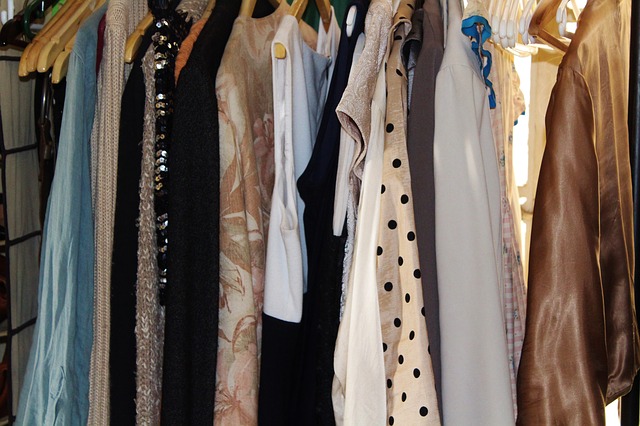
Have you ever heard the phrase “clothes horse”? Urbandictionary.com explains that it is someone who loves new clothes while dictionary.com says one of the definitions is more of a derogatory description of a person who is excessively concerned about wearing fashionable clothing. I always just thought it was someone who had a ton of clothes in their closet so I might be partially right if the person described has a ton of NEW, fashionable clothes in their closet. Well, I thought I might have been considered a clothes horse based on my inaccurate definition because I had a lot of clothes in my closet and dresser and a few boxes for the truly winter moments of Texas… you know those infrequent ice storms or frigidly cold weeks sometime between Christmas and Spring Break. As I have been systematically purging my clothing, it occurred to me just how much impact our clothing can have on the environment because once we don’t like it or it no longer fits, it has to go somewhere and for some that means tossing it in the trash where it will end up in a landfill. Just like we have to think about what we put in our recycling bins or in our compost pile, we should also consider what’s in the clothing we are getting rid of.
Have you noticed just how much synthetic material is in your clothing? Even my denim jeans had a small percentage of spandex in them! I guess so they would contour around the curves better? Provide uplifting support in not-so-perky areas? I really am not sure on that one. However, it made me think about the life cycle of our clothing when it’s not 100% cotton, wool, or silk.
Once upon a time, our clothing was comprised of natural materials like cotton, wool, or silk, depending on your financial situation, and women often made their own clothing out of necessity from the most unusual sources. I saw an article on Facebook that talked about how a flour company back in the 1930s and 1940s printed the pattern for stuffed rabbits and bears on their flour sacks so that mothers could make stuffed animals from the sacks so their children would have a toy. This was back in the Great Depression era when money was hard to come by and spending what little you had on toys was unheard of. Another company – or perhaps there were more than one – would print patterns and designs on their sacks to lure the women shopping to purchase their supplies based on the appeal of the packaging. The Smithsonian’s National Museum of American History has a pretty neat article about the feedsack dress (https://americanhistory.si.edu/collections/search/object/nmah_1105750) and how bags were implemented in people’s wardrobes and homes.
Now, clothing is much more prolific and comprised of multiple materials to appeal to shoppers. Where worn out clothes would often become repurposed for other things like dishrags, curtains, diapers, or even made into dollies for the children in the early 1900s, we don’t often wear out clothing the way they use to. I know I certainly don’t. So what happens with the clothing you no longer like because of the style or cut, it is a bit too faded or stretched out, or it is too small thanks to a love of all things chocolate? With clothing I think is still in excellent repair, I often resell it either at a consignment store or in a garage sale. However, for the stuff that’s – in my view – too worn out to be appealing to anyone else, it is likely to be tossed if it can’t be rehomed in another way.
As a side note for the frugal shopper… buying children’s clothing at a garage sale is a great way to get your little ones inexpensive clothing that could be name brand and even still have tags on some of them. I was selling the stuff my youngest had outgrown for 25 cents per item and by the end of the garage sale, we were telling shoppers to fill up a bag for $5. They were certainly getting more than 20 items in a bag!
Leftovers from the garage sale are often donated them to our local pregnancy center or there’s a church-operated clothing closet store that offers garments to those in need. But what happens to the items we just toss in the trash? Eventually they find their way to a landfill where they should be decomposing but unfortunately, with the inclusion of synthetic material, we may see the same issue with those materials as we do with plastic. They do not decompose and return to provide nutrients in the soil the way that cotton or bamboo fibers would. There’s also the concern about the chemicals they are treated with – both synthetic fibers and natural fibers.
An interesting multi-part article posted on GreenBiz.com discusses how prevalent microfibers are in our world. They wrote that “made from polyester or other popular synthetics that account for a growing proportion of our wardrobes, these fibers linger in the environment, just like the plastic packaging that coats so many of the world’s beaches, and they bond to chemical pollutants in the environment, such as DDT and PCB. Plus, the textiles from which they are shed are often treated with waterproofing agents, stain- or fire-resistant chemicals or synthetic dyes that could be harmful to organisms that ingest them. Worse, we all appear to be consuming microfibers in food and drink.” For the full article, check it out at: https://www.greenbiz.com/article/why-are-our-clothes-so-bad-environment.
There are so many more paragraphs we could delve into concerning our clothing and how that impacts the world we live in on so many different levels. However, I am merely opening the discussion with this post to start the wheels turning about this part of our lives. Unless you’re a nudist where clothing is not a concern, what you wear can leave a footprint you didn’t expect in the world. How much thought do you give to what is in the items you wear? I will certainly be checking tags to try and go with organic materials as much as I can in the future. Go green, fellow Texans!
 Going Green In Texas
I have read several articles which talk about scientists who are finding micro fibers all over the place including the intestinal tract and muscle of fish. The micro fibers seem to be coming from our washing machine water which flows into other water sources and eventually into the ocean. Buying clothing with organic fiber is the ultimate way to go. BUT, as you say, it is becoming increasingly difficult to find clothing without synthetic fiber.
https://www.theguardian.com/environment/2016/jun/20/microfibers-plastic-pollution-oceans-patagonia-synthetic-clothes-microbeads
LikeLiked by 1 person
By “micro fiber” I am meaning synthetic fiber. These are mainly from the increased use of fleece like material.
LikeLiked by 1 person